
Call us: 479-935-1817
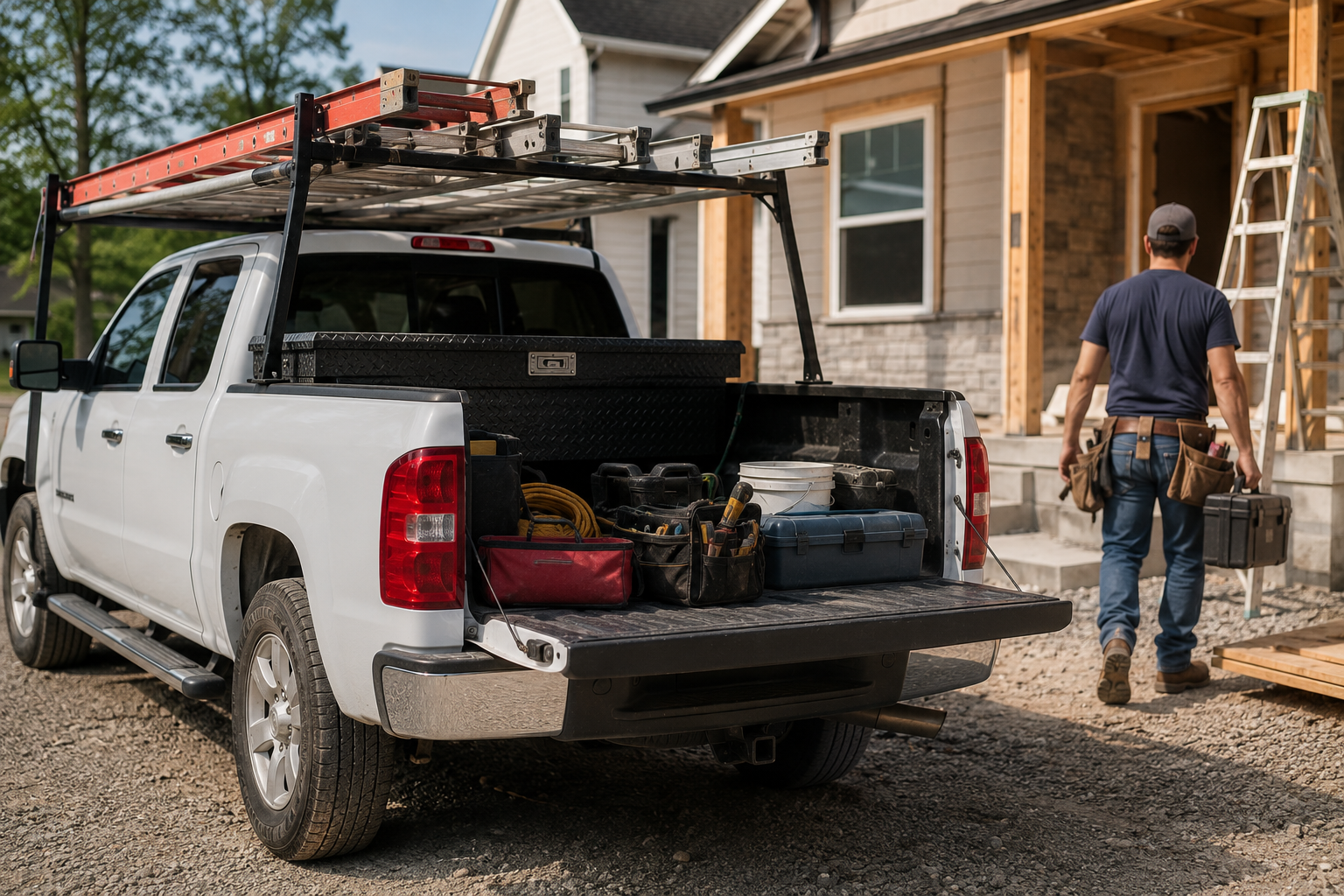

You own a pickup truck, SUV, van, or car that you use for work. Maybe you drive to jobsites, visit customers, transport equipment, or occasionally make deliveries.
But does using a vehicle for business automatically mean you need commercial auto insurance?
Not always. However, assuming your personal auto insurance covers every type of business use could leave you with a serious coverage gap.
The difference between personal and commercial auto insurance depends on more than the type of vehicle you drive. Ownership, business activities, authorized drivers, and the way a vehicle is used all play important roles.
At My Neighborhood Insurance in Farmington, AR, we help business owners throughout Northwest Arkansas compare business insurance options, including commercial auto coverage designed around their actual operations.
Quick Answer: Do You Need Commercial Auto Insurance for Business Use?
You may need commercial auto insurance if your business owns vehicles, employees drive company vehicles, or your vehicles are regularly used for business operations.
However, some limited business activities may be permitted under certain personal auto insurance policies.
The right coverage depends on:
- Who owns or leases the vehicle
- Whether the vehicle is titled to a business
- How frequently it is used for work
- What business activities it supports
- Who drives the vehicle
- Whether it carries customers, goods, or equipment
- The insurance carrier’s underwriting requirements
A pickup truck does not automatically require commercial insurance simply because it is a truck.
Likewise, an ordinary passenger car can require commercial coverage if it is owned by a business or used for certain commercial activities.
What Is the Difference Between Commercial Auto and Personal Auto Insurance?
Both types of insurance can provide important vehicle-related protection, but they are designed for different purposes.
Personal Auto Insurance
Personal auto insurance primarily covers vehicles used for personal transportation.
Common examples include:
- Driving to and from work
- Shopping and running errands
- Family transportation
- Personal travel
- Certain limited business activities permitted by the carrier
A personal auto policy may allow some business use, but the specific activities must be acceptable under the carrier’s underwriting guidelines and policy terms.
Commercial Auto Insurance
Commercial auto insurance is designed for vehicles used in business operations.
Depending on the policy, it can provide liability and physical damage protection for vehicles such as:
- Company-owned cars
- Work trucks
- Commercial vans
- Delivery vehicles
- Service vehicles
- Certain business trailers
- Other eligible commercial vehicles
Commercial auto policies may also provide additional options involving employees, hired vehicles, and non-owned vehicles.
The important difference is that commercial insurance is structured to address business-related vehicle risks that may not be adequately covered by a personal auto policy.
When Might You Need Commercial Auto Insurance?
Consider reviewing commercial auto coverage if any of the following apply to your business.
Your Business Owns the Vehicle
If a vehicle is titled or registered to an LLC, corporation, or other business entity, commercial auto insurance is generally the appropriate starting point.
A standard personal auto policy may not properly insure a vehicle owned by a separate business entity.
You Regularly Drive to Jobsites
Contractors and service providers frequently use trucks and vans to travel between jobsites, transport equipment, and complete customer work.
Examples include:
- Plumbers
- Electricians
- Landscapers
- HVAC contractors
- Painters
- Remodeling contractors
- Repair technicians
A contractor using a truck for regular business operations may have different insurance needs from someone using the same model of truck for personal transportation.
If your business involves construction, maintenance, or repair services, you should also review the broader contractors insurance options available for liability, tools, equipment, and jobsite exposures.
Employees Drive Your Vehicles
When employees regularly operate company-owned vehicles, the insurance policy needs to account for the business and its authorized drivers.
The insurer may evaluate driver experience, driving records, vehicle assignments, and permitted uses.
You Make Deliveries
Using a vehicle to deliver products, equipment, food, or other goods can create exposures that differ from ordinary personal driving.
Some delivery activities may be excluded or restricted under personal auto policies.
Tell your insurance agent exactly what you deliver, how frequently you make deliveries, and whether you transport goods for your own business or for another company.
You Transport Customers or Passengers for Payment
Transporting passengers for compensation can involve specialized coverage requirements.
Rideshare services, passenger transportation businesses, and certain other operations may need coverage designed specifically for those activities.
Personal auto insurance should not be assumed to cover transportation services performed for payment.
What If You Use Your Personal Vehicle for Business?
This is one of the most common questions small business owners ask.
Imagine you own a personal SUV and occasionally drive to meet customers.
That situation may be treated differently from using the same SUV every day to transport business equipment or make deliveries.
Some insurance companies permit certain business activities under personal auto coverage.
Others may require a business-use classification, endorsement, or separate commercial auto policy.
The safest approach is to describe your actual vehicle use to your insurance agent rather than deciding for yourself whether the activity qualifies as personal or commercial.
Our personal car insurance page provides additional information about standard vehicle coverage options and how different types of drivers and vehicle use can affect insurance needs.
Does Driving to Work Count as Commercial Use?
Not necessarily.
Simply commuting from home to a regular workplace does not automatically mean you need commercial auto insurance.
However, there is a difference between commuting and using a vehicle as an essential part of business operations.
Consider these examples:
Example 1: Office Employee
You drive your personal car from home to your office and return home after work.
This is generally considered ordinary commuting.
Example 2: Independent Consultant
You use your personal vehicle to visit clients several times each week.
Depending on the insurance carrier, this may require disclosure and an appropriate business-use classification.
Example 3: Plumbing Contractor
You regularly drive a truck carrying plumbing tools and equipment between customer locations.
Commercial auto insurance may be more appropriate for this type of business operation.
Example 4: Restaurant Owner
You use a vehicle to make regular food deliveries for your restaurant.
This activity may require commercial coverage or other specialized arrangements.
The type of work, frequency of driving, and actual business use all matter.
What Is Hired and Non-Owned Auto Insurance?
Not every business owns vehicles.
Some businesses rely on employees who drive their own cars or use vehicles rented for business purposes.
That creates a different type of exposure.
Hired and Non-Owned Auto Insurance, commonly called HNOA, may provide liability protection for a business involving certain vehicles it does not own.
Hired Auto Coverage
Hired auto liability coverage generally addresses certain vehicles the business rents, leases, hires, or borrows for business purposes, subject to the policy’s definitions and conditions.
For example, your business might rent a van to transport equipment to a temporary project.
Non-Owned Auto Coverage
Non-owned auto liability coverage generally addresses certain liability exposures when employees use their personal vehicles for company business.
For example:
- An employee uses their own car to visit a customer
- A salesperson drives their personal vehicle to a client meeting
- An office employee runs a business errand
- A worker uses their own vehicle to pick up supplies
If an employee causes an accident while conducting business, the company could face liability claims.
Hired and non-owned auto coverage can help address certain business liability exposures, subject to policy terms.
Important: HNOA generally does not pay to repair an employee’s personal vehicle. Its primary purpose is liability protection for the business.
The employee’s own auto insurance and any applicable physical damage coverage must also be considered.
Does a Business Owners Policy Cover Company Vehicles?
Not automatically.
A Business Owners Policy, commonly called a BOP, typically combines general liability and commercial property insurance.
It can provide valuable protection for many small businesses.
However, a standard BOP generally does not replace commercial auto insurance for liability arising from operating business vehicles.
For example, a BOP may provide certain protections for your business property and premises, while a separate commercial auto policy may be needed for company vehicle accidents.
Some insurers may offer hired and non-owned auto liability coverage through an endorsement or another policy arrangement.
If you already have a BOP, review whether your business vehicle exposures are properly addressed.
Our Business Insurance in Farmington, AR page explains additional options such as general liability, commercial property, workers’ compensation, contractors insurance, and business umbrella coverage.
Does Commercial Auto Insurance Cover Tools and Equipment?
Not necessarily.
This is an important distinction for contractors, landscapers, plumbers, electricians, and other service businesses.
Imagine your work truck is stolen while carrying several thousand dollars worth of tools.
Your commercial auto policy may provide protection for the insured vehicle if the appropriate comprehensive coverage applies.
However, tools, inventory, and business equipment inside the vehicle are not automatically covered by commercial auto insurance.
Depending on the business, separate protection may be available through:
- Commercial property insurance
- Inland marine insurance
- Tools and equipment coverage
- Equipment floater coverage
- Other specialized business property endorsements
These policies may have specific requirements involving where equipment is stored, how it is transported, theft protection, deductibles, and coverage limits.
If valuable tools or equipment regularly travel with you, make sure your insurance review includes the property inside the vehicle, not just the vehicle itself.
What Does Commercial Auto Insurance Cover?
Available commercial auto coverages depend on the insurer, the vehicle, and the business.
Common options may include:
Commercial Auto Liability: Helps protect against covered third-party bodily injury and property damage claims arising from the use of insured business vehicles.
Collision Coverage: May help pay for covered damage to an insured business vehicle caused by a collision, subject to the applicable deductible.
Comprehensive Coverage: May help with certain non-collision losses, such as theft, vandalism, fire, hail, or falling objects.
Uninsured and Underinsured Motorist Coverage: May provide protection in certain accidents involving drivers without insurance or with insufficient coverage, subject to applicable policy terms.
Medical Payments Coverage: May help with certain eligible medical expenses, depending on the policy.
Hired and Non-Owned Auto Liability: May help address certain business liability exposures involving rented vehicles or employees’ personal vehicles used for work.
Business Auto Umbrella or Excess Liability: May provide additional liability limits above certain underlying commercial auto policies when applicable.
Every policy has its own terms, limits, exclusions, and conditions.
Having commercial auto insurance does not mean every possible vehicle-related loss is automatically covered.
For a broader explanation of why insurance labels can be misleading, read our article about what full coverage auto insurance really means.
Arkansas Commercial Auto Insurance Requirements
Arkansas generally requires motor vehicles operated on public roads to maintain liability insurance.
For ordinary motor vehicles, the state’s minimum liability limits are:
- $25,000 bodily injury liability per person
- $50,000 bodily injury liability per accident
- $25,000 property damage liability per accident
These limits are commonly referred to as 25/50/25.
However, these general minimums do not necessarily apply to every type of commercial operation.
Certain regulated motor carriers, passenger transportation services, hazardous-material carriers, and other commercial activities may be subject to higher state or federal insurance requirements.
Business contracts may also require higher insurance limits.
For example, a commercial client may require proof of liability insurance at specified limits before allowing a contractor to perform work.
A serious accident involving a business vehicle could result in claims substantially exceeding the ordinary state minimums.
That is why business owners should consider both legal requirements and the actual financial risks associated with their operations.
Can Employees Drive Company Vehicles for Personal Use?
Possibly, but the arrangement should be reviewed with your insurance carrier.
Some businesses allow employees to take company vehicles home or use them for personal errands.
Whether that use is covered depends on the policy, the permitted drivers, vehicle ownership, and applicable endorsements.
A business-owned vehicle used for personal transportation can also create additional questions about the driver’s own insurance protection.
If family members are permitted to drive a company vehicle, that information should also be disclosed.
For more information about the importance of reporting regular vehicle users, see our guide to Undisclosed Drivers and Auto Insurance in Arkansas.
Before allowing employees or family members to use business vehicles outside working hours, confirm the rules with your insurance agent.
How Much Does Commercial Auto Insurance Cost in Arkansas?
Commercial auto insurance costs vary considerably.
Factors that may affect premiums include:
- Business industry
- Vehicle type
- Number of vehicles
- Vehicle value
- Business use
- Annual mileage
- Garaging location
- Driver experience
- Driving records
- Claims history
- Liability limits
- Deductibles
- Coverage options
For example, a small consulting business with one passenger car may have very different insurance needs from a landscaping company operating several trucks and trailers.
The lowest premium is not always the best option if it comes with inadequate liability limits or missing coverage.
Comparing carriers can help you evaluate both price and protection.
What Information Do You Need for a Commercial Auto Insurance Quote?
Before requesting a quote, it helps to gather information about your business and its vehicles.
Your agent may ask for:
- Business name and address
- Type of business
- Vehicle identification numbers
- Vehicle ownership or lease details
- Vehicle make, model, and year
- Drivers and their license information
- How the vehicles are used
- Whether employees drive personal vehicles for work
- Whether your business rents vehicles
- Typical driving distances
- Types of goods or equipment transported
- Current insurance information
- Previous claims
- Required liability limits
- Contractual insurance requirements
Accurate information helps insurance companies evaluate your business and provide quotes that reflect your actual operations.
If you need to update an existing policy after purchasing a new truck, hiring employees, or changing your operations, you can also request assistance through our Service Center.
Why Work With an Independent Insurance Agency?
Commercial vehicle insurance is not one-size-fits-all.
A contractor, delivery business, consulting firm, repair company, and landscaping business can have very different insurance needs.
At My Neighborhood Insurance, we work with multiple insurance carriers to help business owners compare available commercial insurance options.
We can help you review:
- Commercial auto liability
- Comprehensive and collision coverage
- Business vehicle classifications
- Authorized drivers
- Hired and non-owned auto liability
- Tools and equipment exposures
- Commercial umbrella coverage
- Business insurance packages
- Coverage limits and deductibles
We serve businesses in Farmington, Fayetteville, Prairie Grove, Lincoln, Greenland, West Fork, and communities throughout Northwest Arkansas.
Our goal is to help you understand the protection your business needs without paying for coverage that does not fit your operations.
Frequently Asked Questions About Commercial Auto Insurance
Do I need commercial auto insurance if I use my personal car for work?
Not always. Some limited business activities may be acceptable under a personal auto policy. However, regular business use, deliveries, certain contractor activities, and other commercial operations may require different coverage. The answer depends on your insurer and actual vehicle use.
Does a pickup truck automatically need commercial insurance?
No. The type of vehicle alone does not determine whether commercial auto insurance is necessary. Ownership, drivers, business activities, and the way the truck is used are important factors.
Does commercial auto insurance cover employees driving their own cars?
A commercial auto policy may include non-owned auto liability coverage for certain business exposures involving employees’ personal vehicles. This coverage is not automatic under every policy and generally does not pay for physical damage to the employee’s car.
Does my LLC need commercial auto insurance?
If your LLC owns or leases vehicles used for business, commercial auto insurance is generally appropriate. If you personally own a vehicle and use it for both personal and business purposes, the correct arrangement depends on how the vehicle is used and the carrier’s underwriting requirements.
Does general liability insurance cover business vehicle accidents?
Generally, no. Standard commercial general liability insurance typically excludes many claims arising from the ownership, maintenance, or use of automobiles. Commercial auto insurance is designed to address eligible vehicle liability exposures.
Can I use a commercial vehicle for personal driving?
Potentially. Some commercial auto policies allow certain personal use of insured company vehicles, but coverage depends on the policy, authorized drivers, and other conditions. Personal use should be discussed with the insurance carrier.
Is commercial auto insurance more expensive than personal auto insurance?
It can be, but the cost depends on the vehicle, industry, use, drivers, location, liability limits, and coverage selections. The policies are designed for different risks, so comparing price alone does not provide a complete picture.
Protect Your Business Vehicles With the Right Coverage
Does your business vehicle need commercial auto insurance?
The answer depends on who owns it, who drives it, how it is used, and what your insurance policy actually covers.
A personal auto policy may be appropriate for some limited business activities, but it should not be assumed to protect every commercial exposure.
Whether you operate a single work truck, manage a fleet of service vehicles, or have employees using their own cars for business errands, reviewing your coverage before an accident can help you identify important gaps.
Not sure whether your personal or commercial auto policy is right for your business?
At My Neighborhood Insurance, we can review your vehicle use, compare available commercial insurance options, and help you understand what protection fits your business.
Call us at 479-935-1817 or contact My Neighborhood Insurance in Farmington, AR to request a commercial auto insurance review or quote.
Let us help you protect your vehicles, your business, and the work you have built.